Research Program: The Speed of Spread and the Speed of Detection
One question runs through my work: how do the speed at which a pathogen spreads and the speed at which we can detect it determine whether an outbreak can be controlled? The themes below are how that question plays out across pathogens, scales, and surveillance systems. Click any theme to expand.
Speed, Detection, and Outbreak Controllability
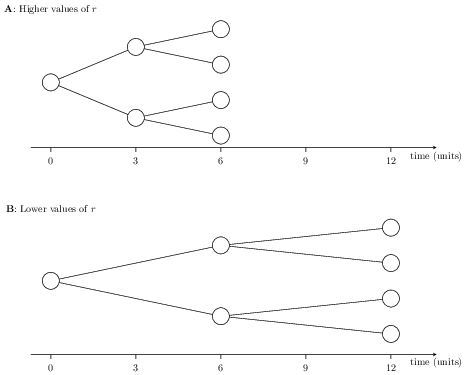
How a pathogen's intrinsic growth rate and other life history properties, not R₀ alone, may limit what surveillance and control can achieve.
Speed, Detection, and Outbreak Controllability
How a pathogen's intrinsic growth rate and other life history properties, not R₀ alone, may limit what surveillance and control can achieve.
Why it matters. The controllability of an infectious disease is usually framed around the basic reproduction number R₀ and the fraction of transmission that occurs before symptoms appear. I focus instead on pathogen speed or the intrinsic growth rate and what it implies for how quickly we must detect and act.
Representative work
- Time is of the Essence: Effectiveness of Dairy Farm Control of H5N1 is Limited by Fast Spread — medRxiv, 2024
- Challenges and Lessons Learned from Preliminary Modeling of Within-Herd Transmission of H5N1 in Dairy Cattle — medRxiv, 2024
- The Challenges of Surveying Heavy-Tail Distributions for Use in Infectious Disease Dynamics — medRxiv, 2023
In progress. Extending the speed–controllability framework from H5N1 in dairy cattle toward a more general account of when fast-moving pathogens can still be contained at the source.
Antimicrobial Resistance Dynamics
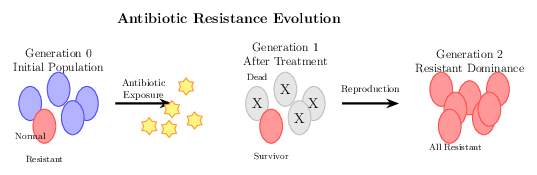
How resistance spreads through core groups and hospital populations — and how prophylaxis and treatment reshape it.
Antimicrobial Resistance Dynamics
How resistance spreads through core groups and hospital populations — and how prophylaxis and treatment reshape it.
Why it matters. Resistance is a moving target. The faster it spreads through a sexual-network core group or a hospital, the narrower the window in which stewardship can work; the same speed-versus-detection tension, applied to evolution rather than transmission.
Representative work
- Promise and peril: doxycycline prophylaxis and the spread of resistance among diverse populations — The Lancet Microbe, 2025
- Comparison of MIC as Measured by Etests and Agar Dilution in Neisseria gonorrhoeae Isolates, 2018–2024 — Sexually Transmitted Diseases, 2025 (accepted)
- Analysis of ESBL-Producing E. coli and Klebsiella pneumoniae: Is ESBL-Targeted Therapy Always Needed? — Antimicrobial Stewardship & Healthcare Epidemiology, 2023
In progress. Core Group Dynamics of Gonorrhea Infection in a North Carolina County, 2018–2023 (preprint) characterizes the transmission core that sustains resistant gonorrhea.
Supported in part by CDC-funded surveillance of resistant gonorrhea (SURRG) and the CARGOS program.
Outbreak Response and Rapid Modeling
Decision-ready analyses delivered while an outbreak is still unfolding, not months after it ends.
Outbreak Response and Rapid Modeling
Decision-ready analyses delivered while an outbreak is still unfolding, not months after it ends.
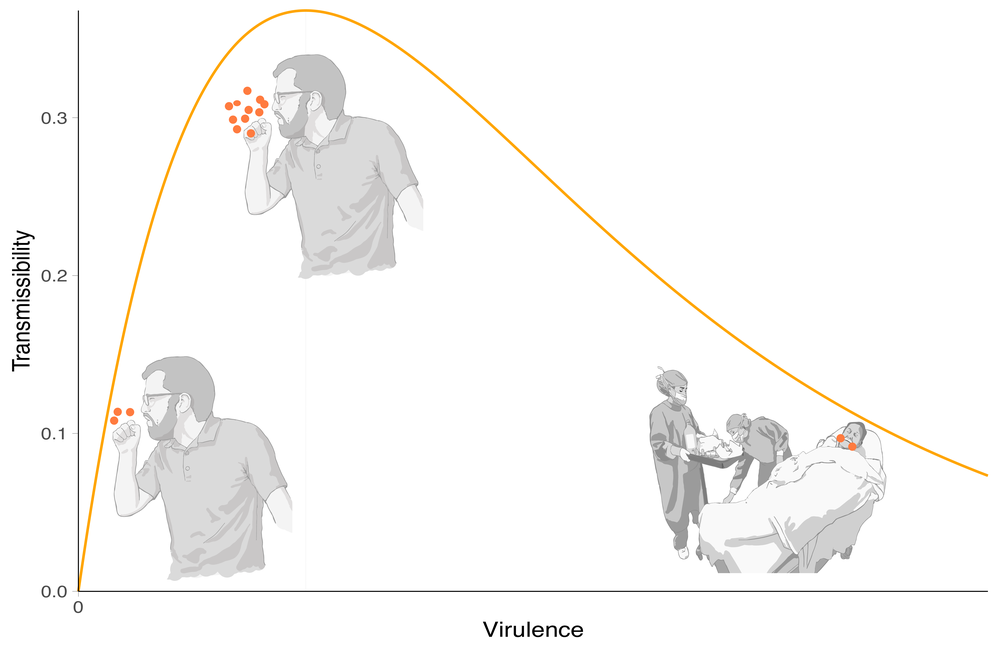
Why it matters. When a new threat emerges, the analysis that arrives in days is worth more than the perfect analysis that arrives in months. I build rapid risk assessments and short-turnaround models that health departments and clinicians can act on in real time — the practical payoff of taking detection speed seriously.
Representative work
- Global Monkeypox Case Hospitalisation Rates: A Rapid Systematic Review and Meta-Analysis — EClinicalMedicine, 2022
- A Rapid Risk Assessment for Measles Outbreaks in North Carolina — North Carolina Medical Journal, 2025 (accepted)
- Rapid Impact Analysis of B.1.1.7 Variant on the Spread of SARS-CoV-2 in North Carolina — medRxiv, 2021
- Estimated Monkeypox Susceptible MSM Population in North Carolina — medRxiv, 2022
Grew out of work for the CDC-funded COVID-19 Community Research Partnership and ongoing state and local outbreak response.
Surveillance, Ascertainment, and Delay Distributions
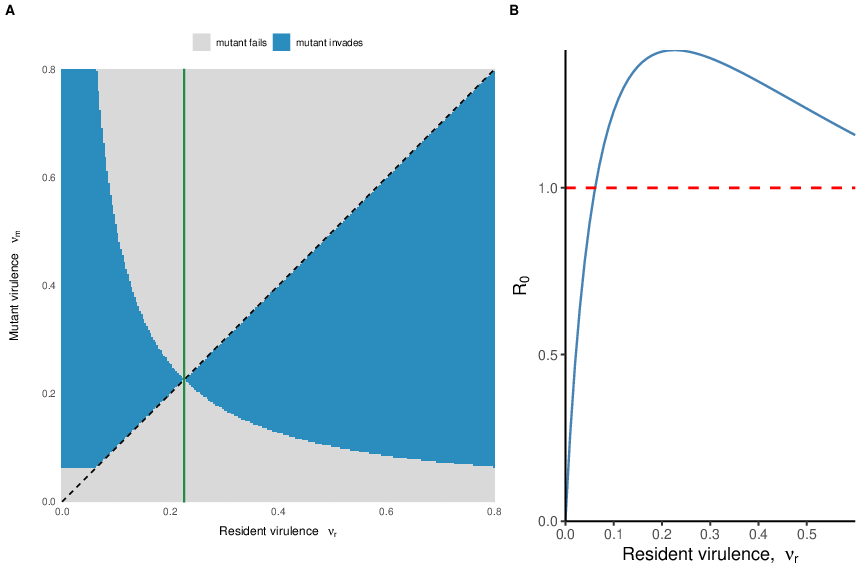
Quantifying what surveillance misses — underreporting, reporting delays, and detection lag.
Surveillance, Ascertainment, and Delay Distributions
Quantifying what surveillance misses — underreporting, reporting delays, and detection lag.
Why it matters. Every surveillance signal is filtered through delays and incomplete ascertainment. Detection is the other half of the speed problem: you cannot act on what you have not yet measured. I quantify these biases and design systems and methods that shorten the lag between an event and our awareness of it.
Representative work
- Lyme Disease Under-Ascertainment During the COVID-19 Pandemic in the United States — JMIR Public Health and Surveillance, 2024
- Automatic Case Cluster Detection Using Hospital Electronic Health Record Data — Biology Methods and Protocols, 2023
- Expansion of Lateral Flow Assays to Adolescents and High-Risk Populations — Sexually Transmitted Diseases, 2024
- Attack of the Bots: Lessons from a Compromised Online MSM Survey — Epidemiology and Infection, 2025
This work also underpins the open-source tools I contributed to for nowcasting and reporting-delay correction — including epinowcast, EpiNow2, and PrimaryCensored.jl.
Spatial Epidemiology and Risk Heterogeneity
Mapping how disease risk varies across geography — from the ecology of vector-borne pathogens to the contextual factors that concentrate risk in particular places and populations.
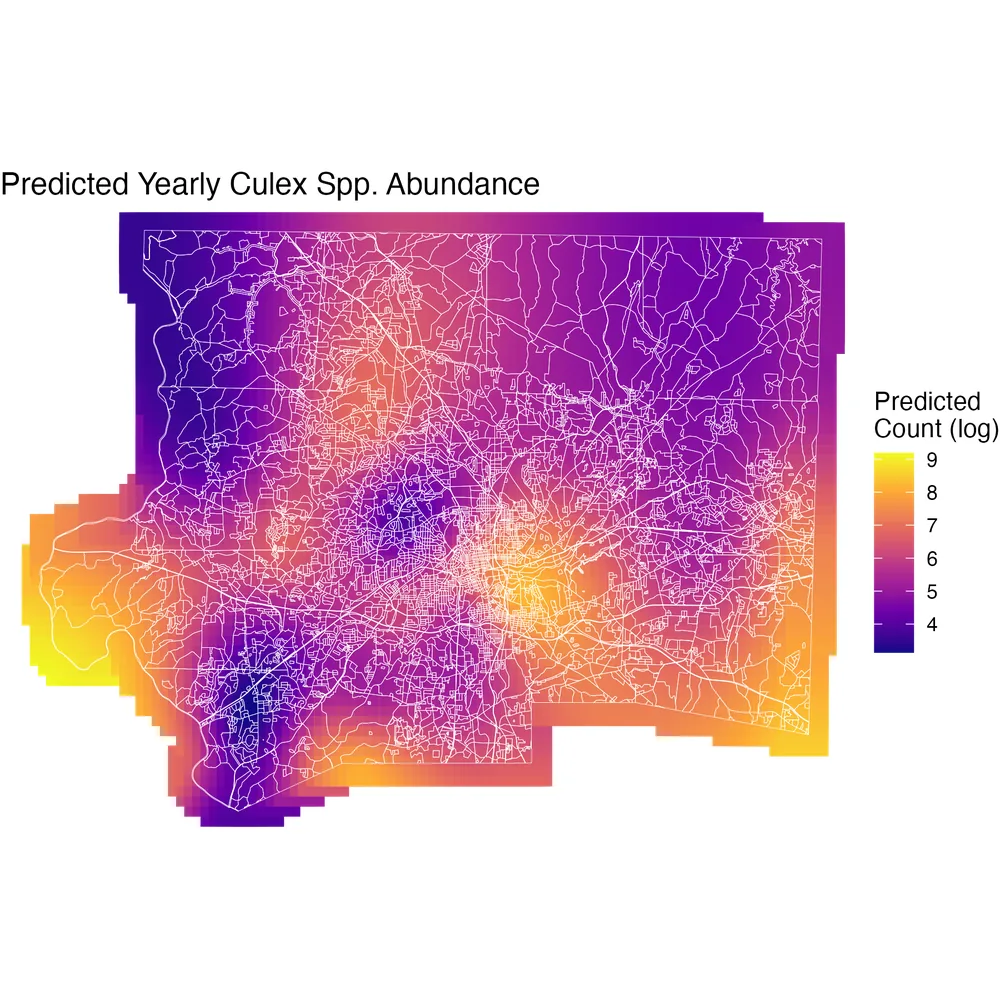
Spatial Epidemiology and Risk Heterogeneity
Mapping how disease risk varies across geography — from the ecology of vector-borne pathogens to the contextual factors that concentrate risk in particular places and populations.
Why it matters. Risk is never evenly distributed in space. Two complementary strands run through this work: the spatial ecology of vector-borne and emerging pathogens, and the geographic and contextual factors that concentrate infection risk in particular places. Both ask the same question the rest of my program asks about time. Ultimately, where is the signal, and can we find it early enough to act? Mapping it shows where surveillance and intervention will do the most good.
Spatial ecology of vector-borne disease
- Tropical Diseases in the United States: Beyond Poverty — Advancing an Ecological Framework in Tropical Medicine — The American Journal of Tropical Medicine and Hygiene, 2024
- Molecular identification of tick-borne pathogens in dog ticks from Ghana — Medical and Veterinary Entomology, 2026
Geographic & contextual risk
- Exploring Social Vulnerability in National Health Safety Network (NHSN) Surgical Site Infections — Infection Control & Hospital Epidemiology, 2025
- Association of Social Vulnerability Index and Masking Adherence in the COVID-19 Community Research Partnership — BMC Public Health, 2024
In progress. Ongoing projects related to local vector-borne disease dynamics and antimicrobial resistance dynamics across spatial scales